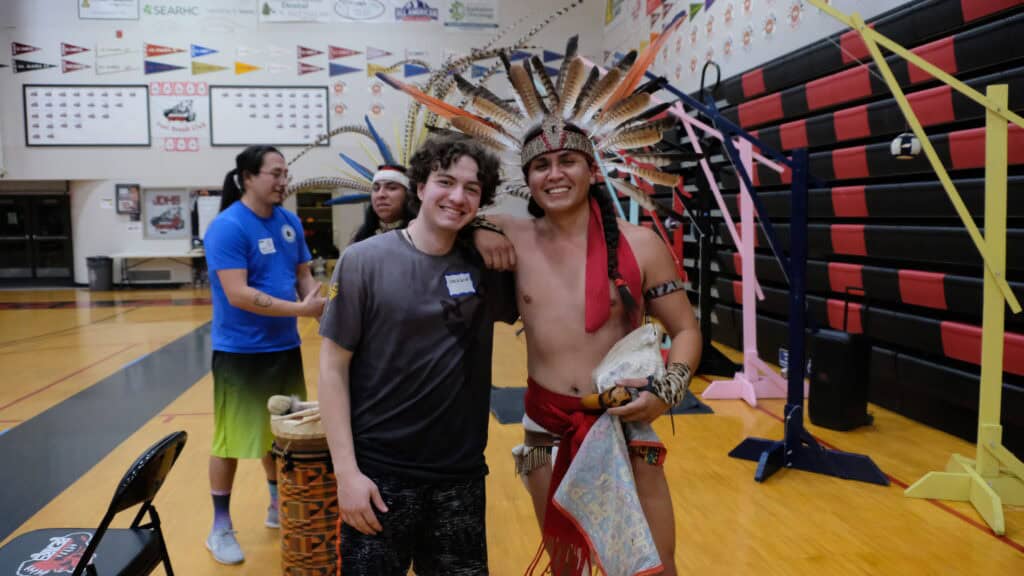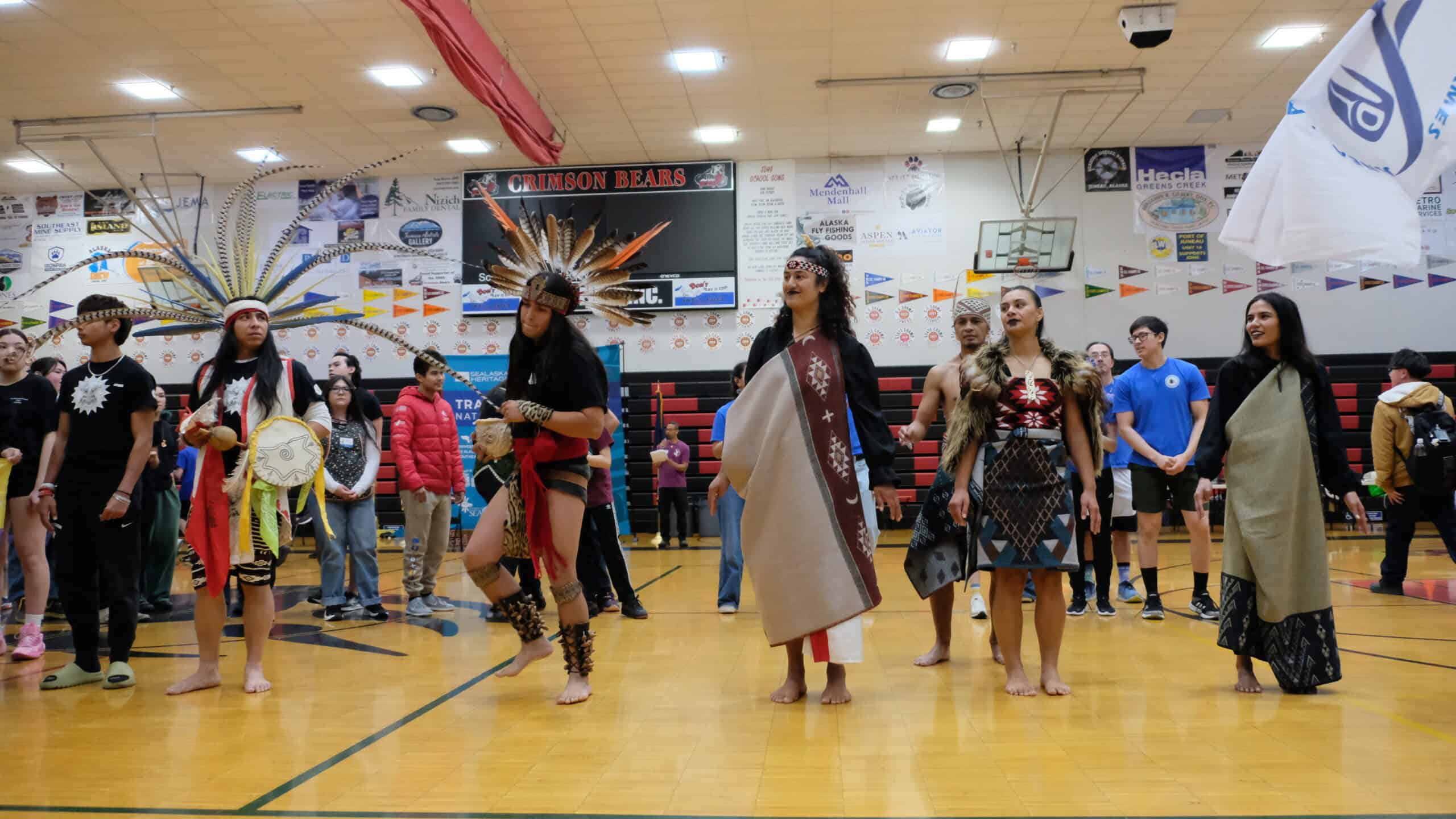
The deep call of a conch shell filled the Juneau-Douglas High School Gym as Ehecatl Cortes Hernandez and Isaac Eagle Bear Alvarado took to the floor.
Wearing Aztec headdresses with pheasant and hawk feathers, the men performed traditional dances, their ayoyote seed leg rattles shaking in beat with the drum.
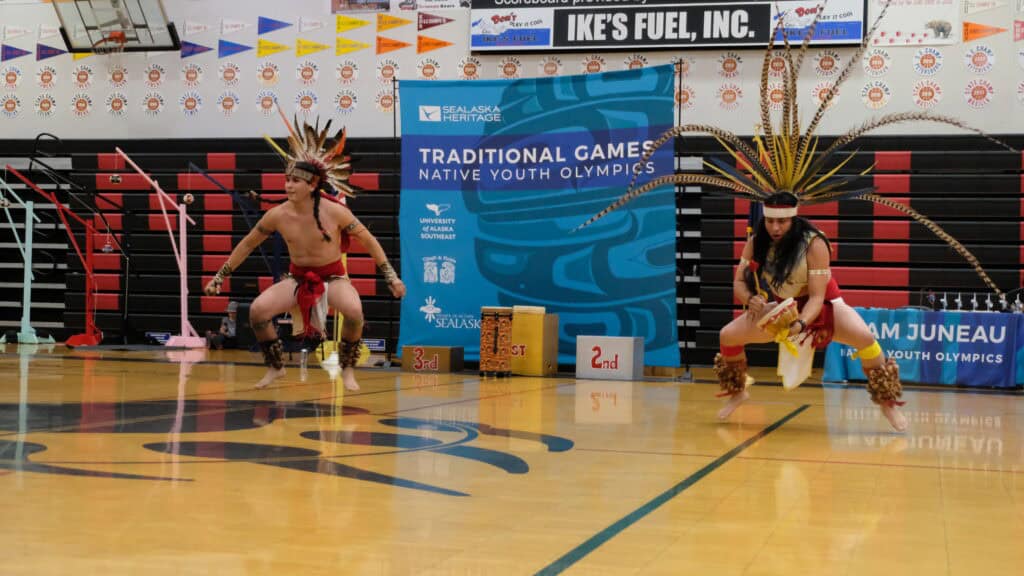
They traveled more than 4,000 miles from Mexico City to Alaska to share their culture at the 9th Annual Traditional Games, held in Juneau April 10-12, 2026.
“We wanted to bring a global perspective on Traditional Games so that our youth could experience the diversity of Indigenous games here in Juneau,” said Tlingit & Haida Wellness Administrator Kyle Worl.
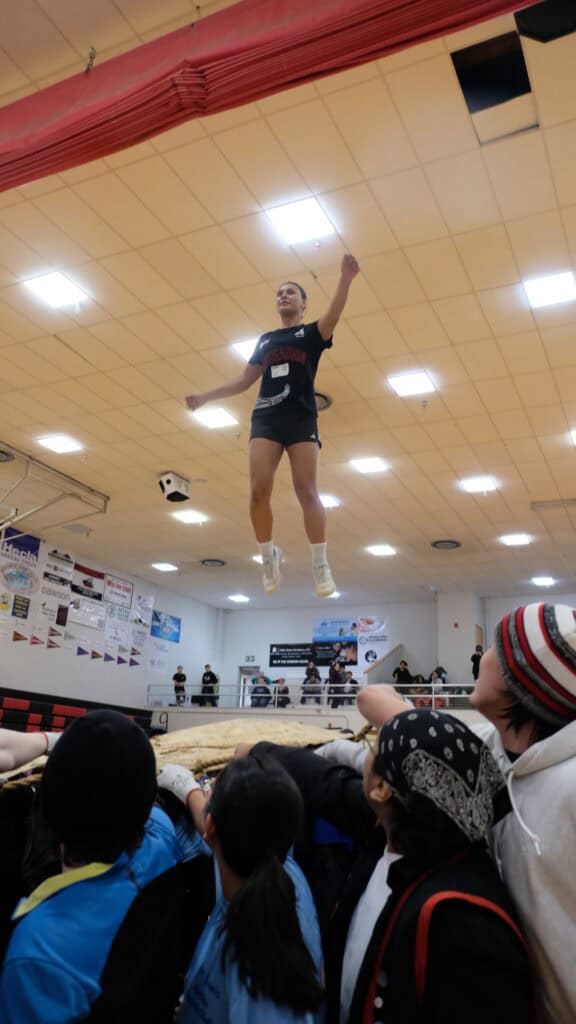
This year’s event brought in more than 280 athletes from 30 teams, representing four countries.
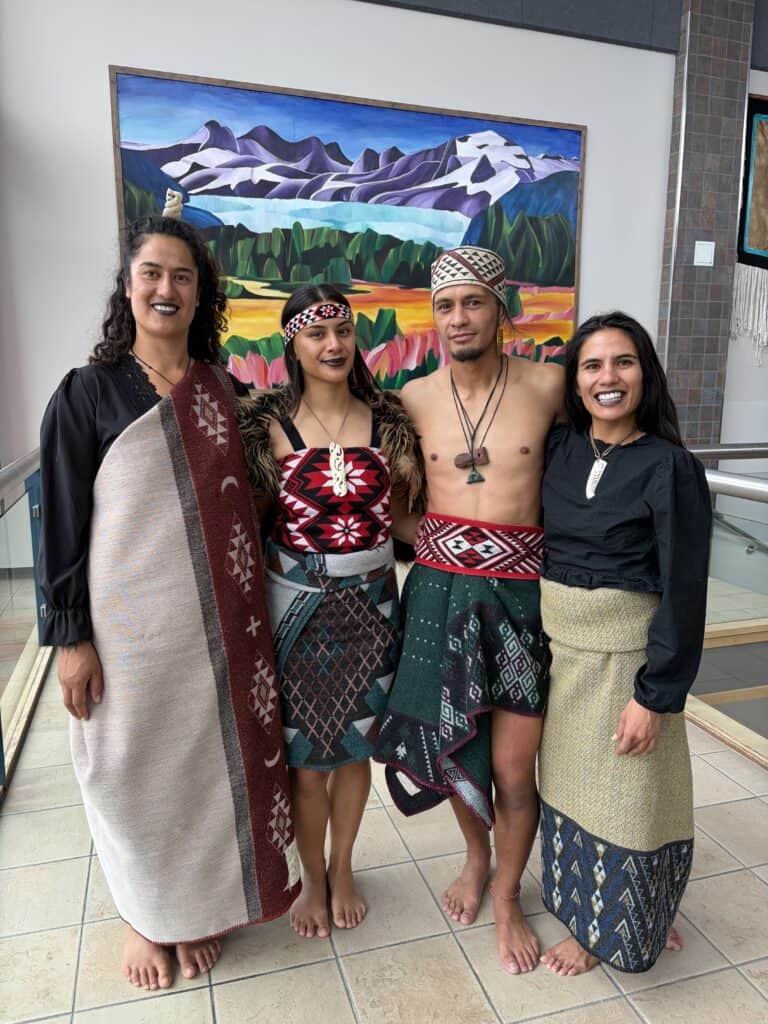
In addition to the Aztec visitors from Mexico, Māori athletes Yves Brown, Joshua Rewha, Hana-May Riedlinger-Kapa and Ariana Howell represented their home country of Aotearoa (New Zealand).
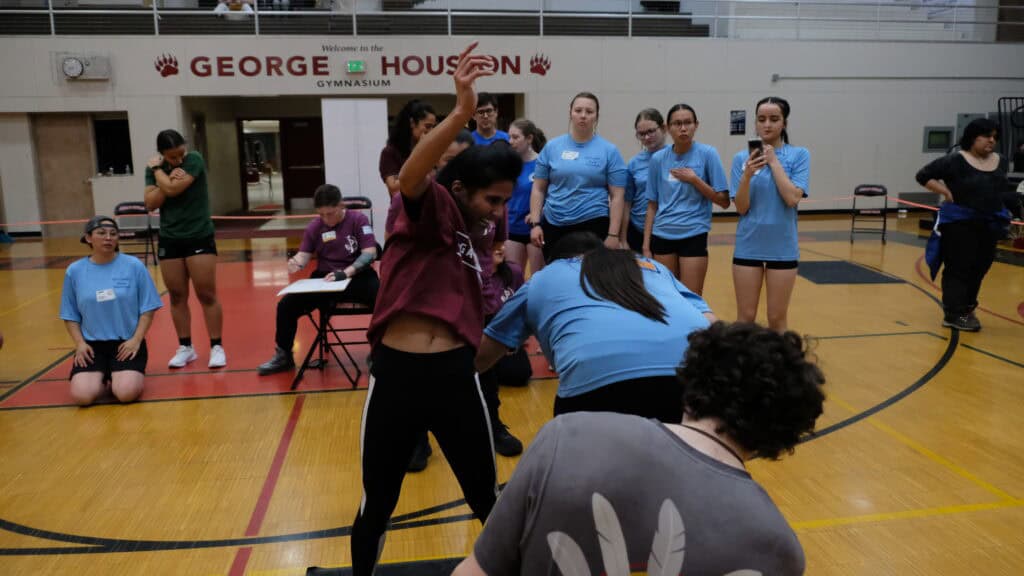
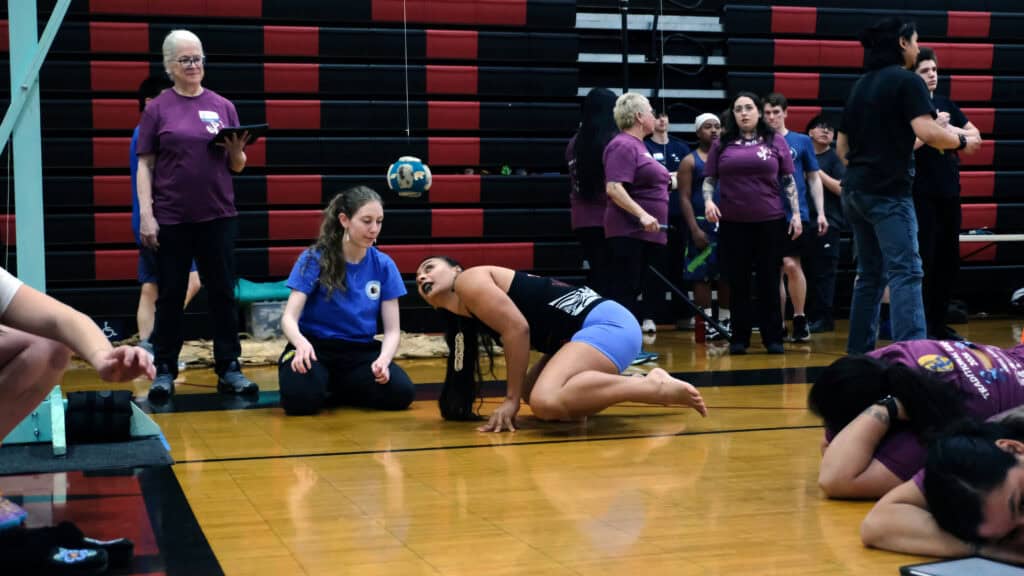
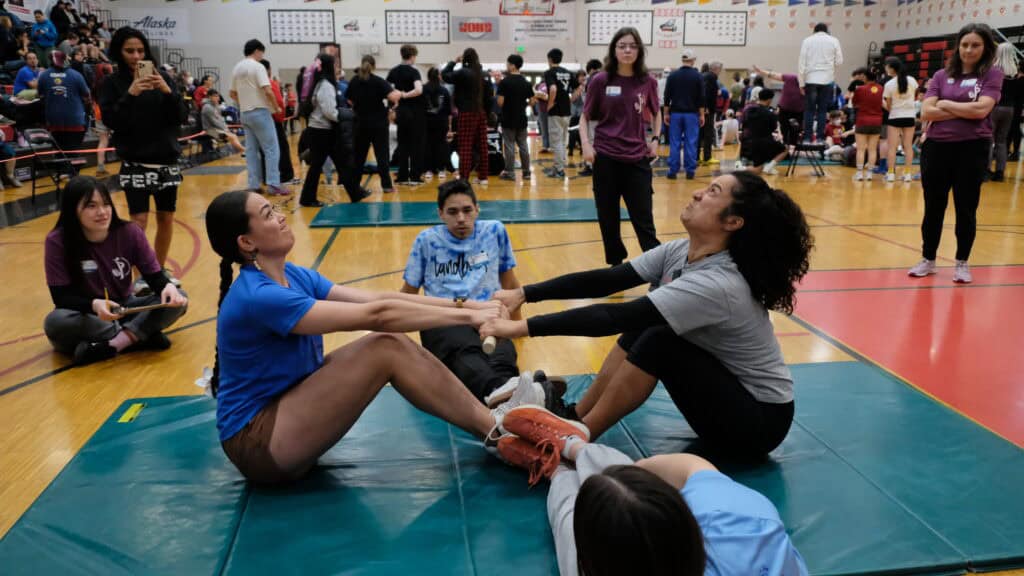
At an international games workshop, Yves Brown and Joshua Rewha demonstrated one of their Kho Kho games where two people grip a ring then try to tag each other’s shoulders, knees and ankles.
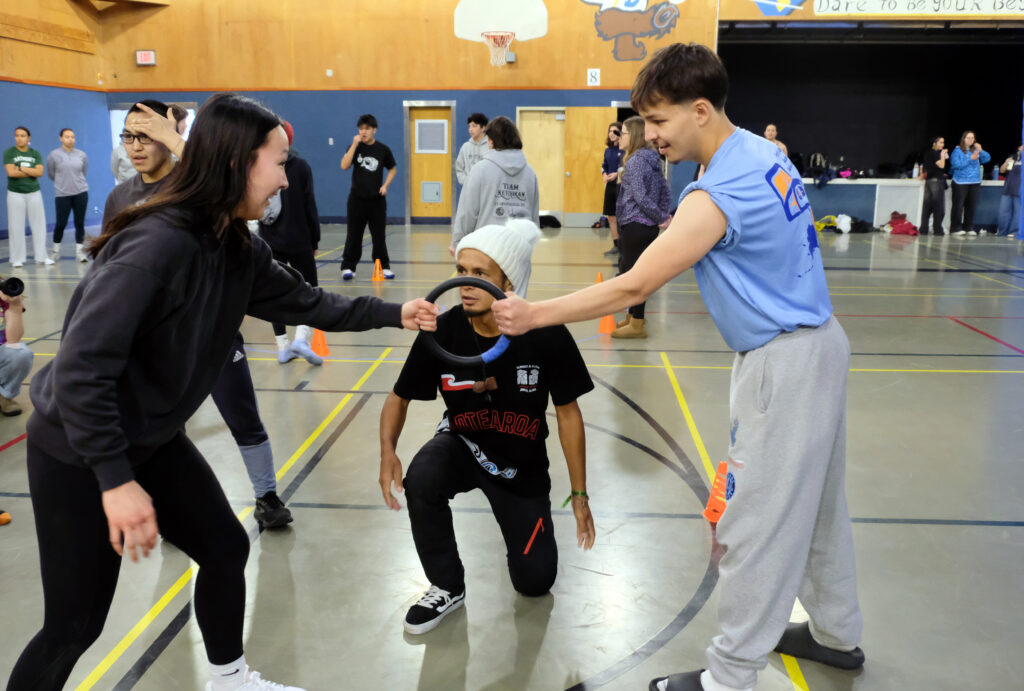
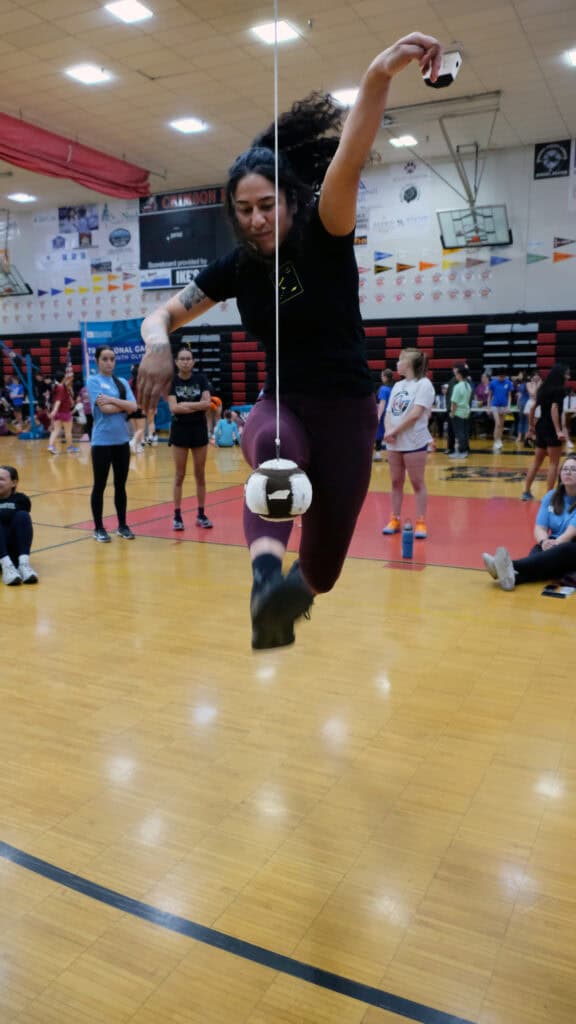
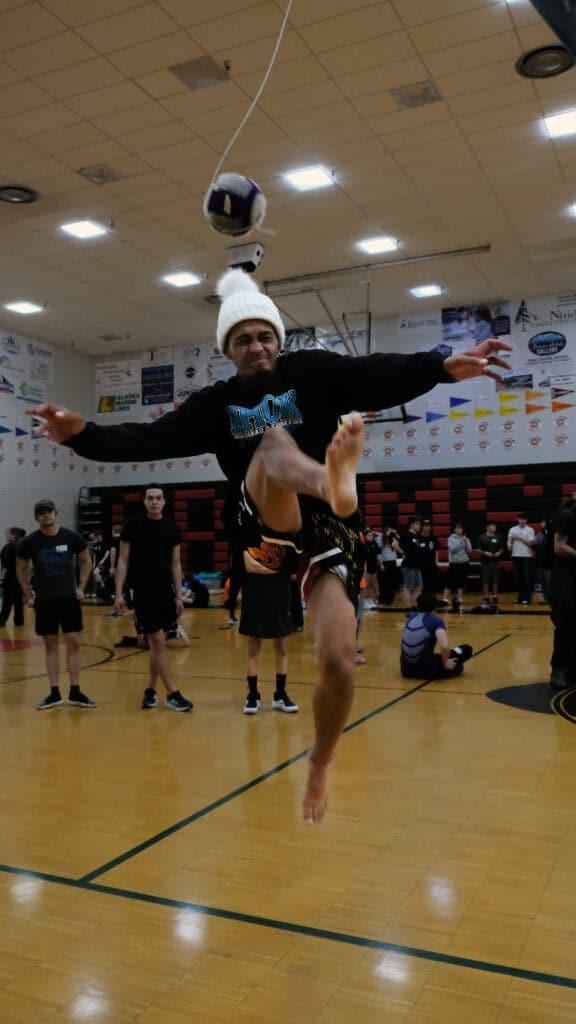
Yves was honored to share one of Aotearoa’s traditional games with athletes who usually compete in Arctic sports like the two-foot high kick and kneel jump and Dene games like the Inuit stick pull.
“It’s beautiful. I love to learn about new games and different cultures that I’m not familiar with and share our games as well and find similarities. Despite our different climates that we have – Arctic sports are a lot about survival where ours were a lot about war and weaponry – it’s cool to see we have some similarities between our strength games especially,” Yves said.
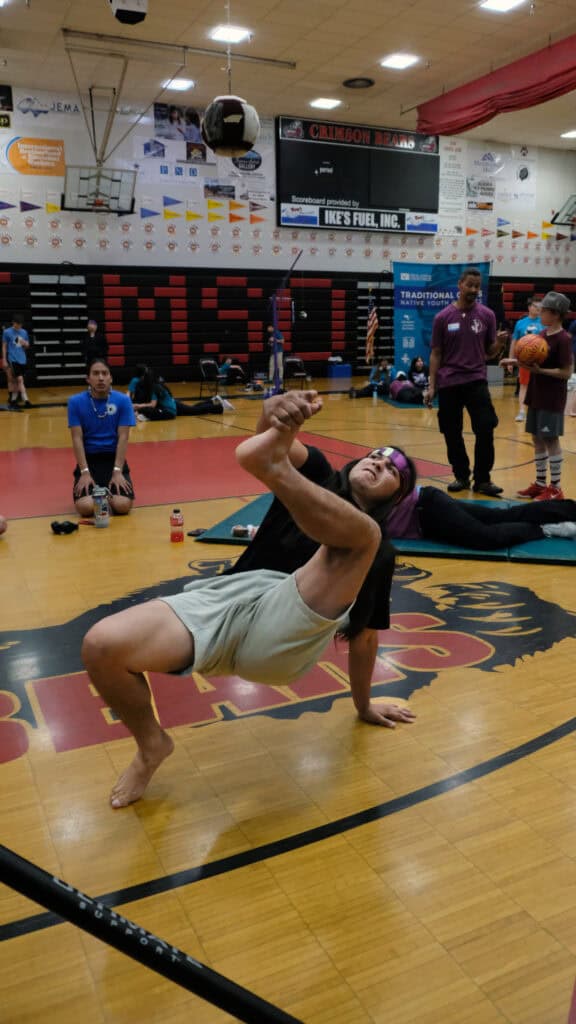
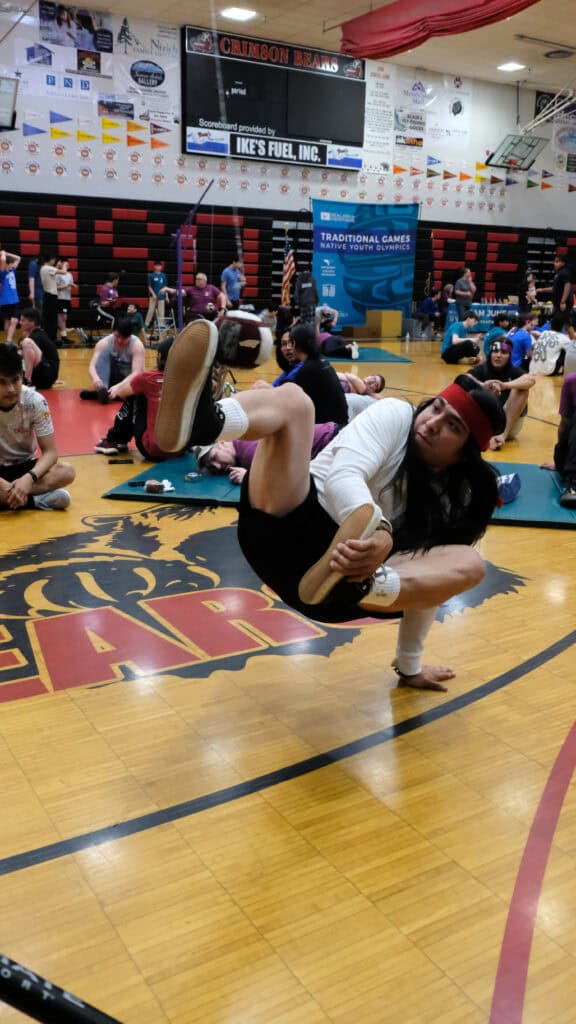
On the other side of the gym, Ehecatl and Eagle Bear showed students how to play Aztec Hip Ball, a game played by their ancestors for more than 3,000 years.
“It feels pretty historic. The game has never been played so far north,” Ehecatl said.
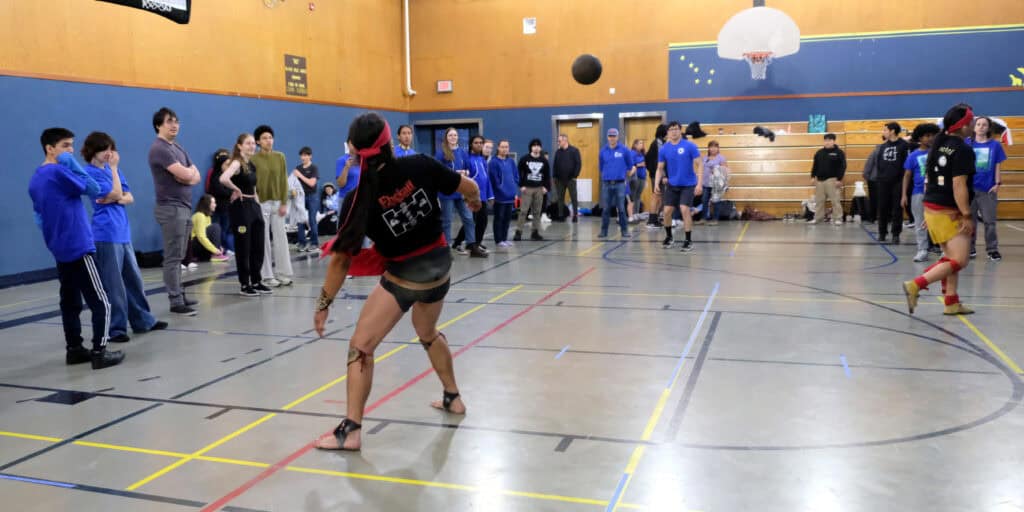
Ehecatl said he’s always been an athlete, usually competing in track and field and boxing, but knew there was something missing.
“The games deeply resonated. When I started traditional sports, it comes with that cultural context, as a way to honor what we have at our very core. It has a ceremonial part, the Indigenous, deep part that your heart sees,” he said.
Alaskan athletes like Qapqan Brantly appreciate the opportunity to learn about Indigenous games from other countries.
Qapqan is a freshman at the University of Alaska Fairbanks. She’s Iñupiaq with family ties to Kotzebue but grew up in Anchorage. She said competing in Native games helped connect her to her heritage.
“It’s important to help keep the cultures alive especially with a lot of Indigenous cultures today. It’s important we be able to share all that we can so we can continue growing,” she said.
Kyle said he hoped introducing athletes to international games would give them a greater understanding of the cultural diversity of sports.
“We hope they enjoy and feel great pride for our own games. That this is a cultural tradition that people around the world are keeping alive,” Kyle said.
The Traditional Games event not only allows athletes to showcase their strength and skills, it also inspires them to carry these games forward, ensuring that strong cultural connection for generations to come, no matter where they call home.