Language preservation and revitalization take time and passion. For Gúud Gíigangaa Lauryn Framke, learning Xaad Kíl also means several trips to Haida Gwaii, British Columbia to further her fluency. The language lessons are part of her training to become one of Tlingit & Haida’s Xaad Kíl teachers on Prince of Wales Island.
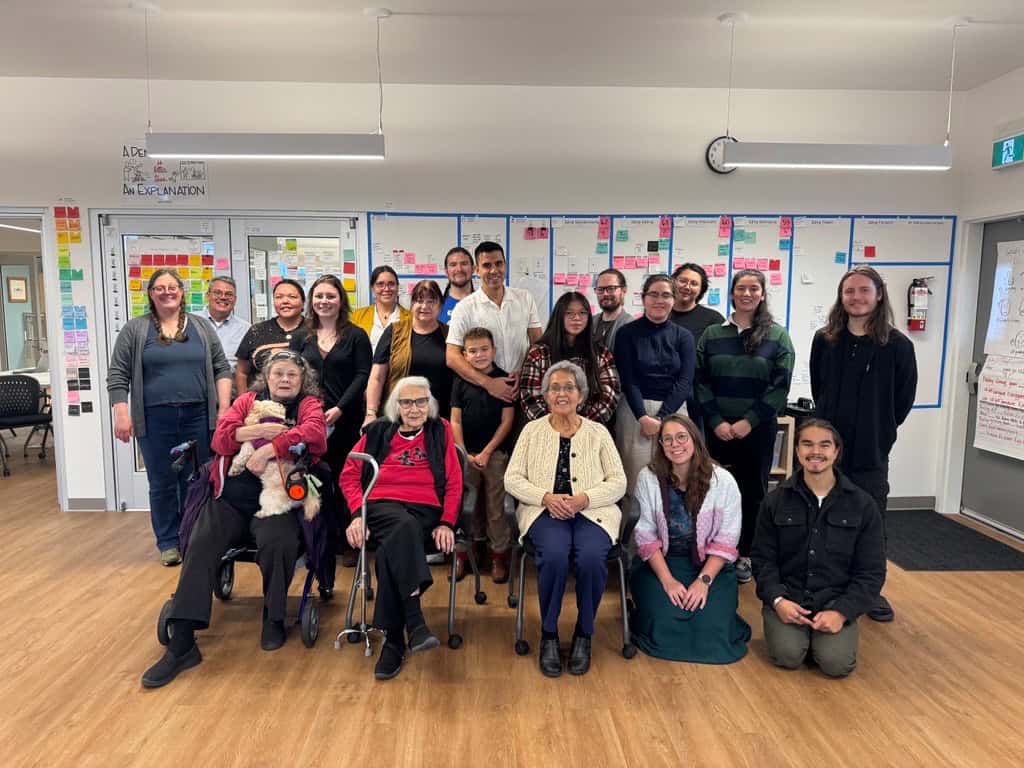
Xaad Kíl Née, the Haida Language Office on Haida Gwaii started a Pilot immersion program in the community of Gaw Tlagee. Gúud Gíigangaa traveled to the community to see how they’re teaching the language.
The program uses the, “Where Are Your Keys” method that doesn’t rely on English for translations.
“It uses American Sign Language that’s geared toward each Indigenous language and they use props and games to learn the language completely without using any English. It’s designed so you flip the English switch off in your brain so you’re using all these other tools to learn our language,” Gúud Gíigangaa explained.
She’s been studying Xaad Kíl since she was 16 when a culture camp in Juneau sparked her interest. With a scholarship from Sealaska Heritage Institute, Gúud Gíigangaa received her bachelor’s degree in Alaska Native Studies from the University of Alaska Southeast in Juneau.
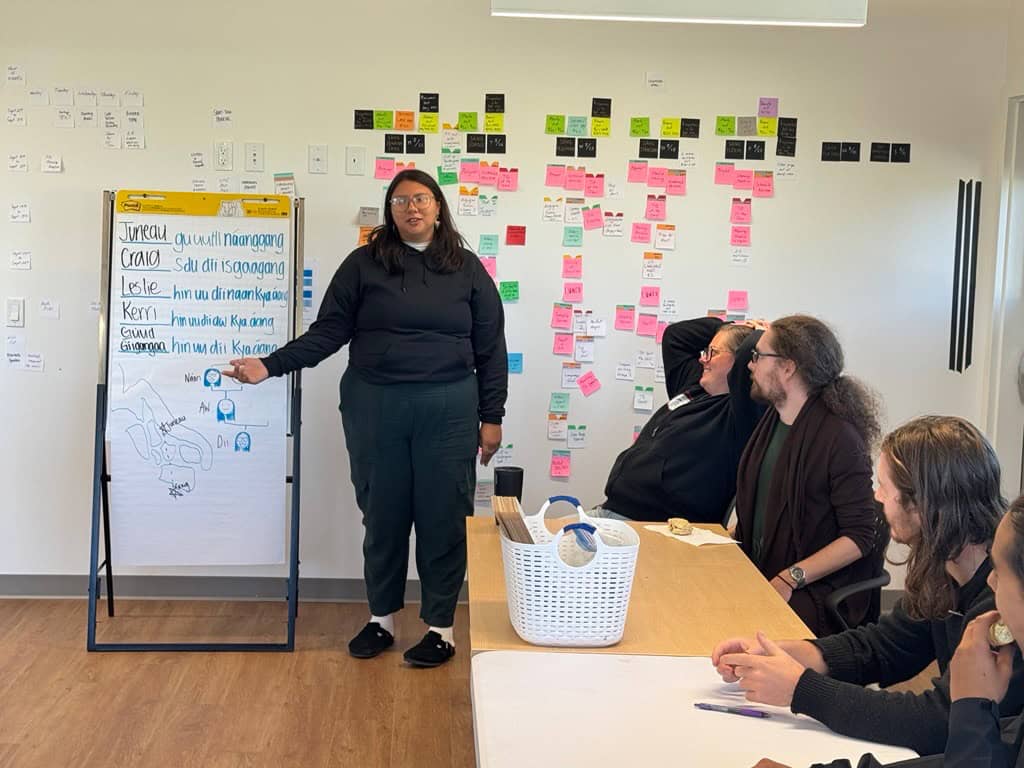
Most of her learning has been online, taking Zoom classes through the COVID-19 pandemic. Because of the shortage of speakers, it hasn’t been easy to find people to practice with.
Xaad Kíl is listed in UNESCO’s Atlas of the World’s Languages in Danger, and at age 96, lskyaalas Delores Churchill is the last birth speaker of Masset Haida dialect.
Through her work at Tlingit & Haida, Gúud Gíigangaa gets the chance to learn first-hand from Náanii Delores, who makes regular trips to Hydaburg to work with K’uyáang Ben Young, the Tribe’s Early Education Curriculum Development Manager. Together with Hltámjuus Markel Wallace, the other Xaad Kíl teacher, they get to immerse themselves with Náanii Delores.
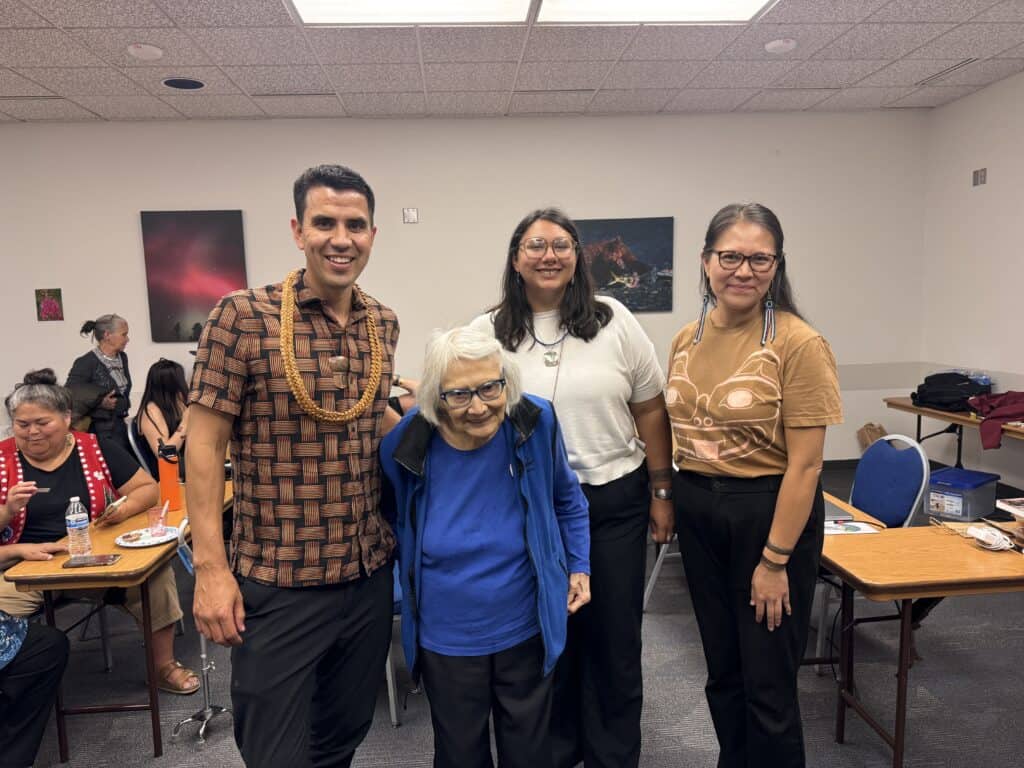
“Listening to everything she has to say has been great for my language learning because she has so much knowledge. I feel very grateful I get to learn from her,” Gúud Gíigangaa said.
For Hltámjuus , working with Elders like Naani Delores is a vital part of language revitalization.
“Gin sḵ’at’adáa ‘la’áaylang isgyáan colleagues-gaay ahl díi gudangée ‘láagang. Kíilang t’aláng sḵ’at’áang. Gíijgwaa tlíisdluwaan tl’ ‘wáadluwaan sḵ’at’áasaang. I’m grateful for my teachers and colleagues. We are learning our language. Hopefully, someday, everyone will learn it,” Markel said.
K’uyáang said the combination of learning from Elders and a birth speaker like Náanii Delores and the trips to visit Xaad Kíl Née on Haida Gwaii helps the team realize the full potential of the language learning and teaching.
“Xaad Kíl is richly descriptive, humorous, and deeply binding for those who understand and speak it, with immense expressive possibilities. We view the use of the language as an essential fiber of our program’s social fabric, one that we invite preschoolers and their interested families to actively participate in,” K’uyáang said.
The budding immersion program on Prince of Wales Island is Tlingit & Haida’s next step in promoting language preservation and revitalization. In 2019, the Tribe started Haa Yoo X’atángi Kúdi, a Lingít immersion program for preschoolers in Juneau.
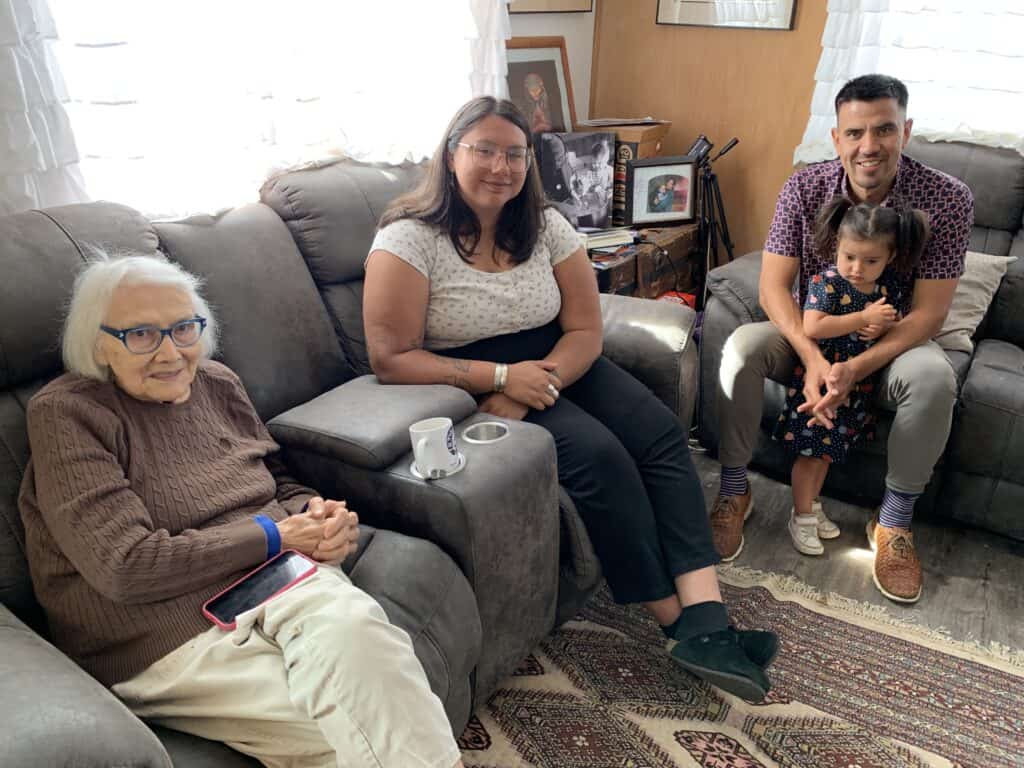
Gúud Gíigangaa said investing in Native languages is crucial for their success.
“The Haida language is not as accessible as other languages so I think it’s so important Tlingit & Haida has been able to provide these jobs and opportunities to Haida folks and they’re investing in the future of our youth by building these immersion nests so our kids on POW can have the opportunity to learn Xaad Kíl.”
She believes Haida youth deserve to have a Haida language nest in their home community and opportunities for families to learn the language.
Gúud Gíigangaa wants to see Xaad Kíl play a more prominent role in people’s lives, like it does on Haida Gwaii where grocery store signs are written in the Haida language and people around town say háw’aa (thank you). Hydaburg has taken a step toward that goal with street signs in Xaad Kíl.
“The way the language exists in Haida Gwaii is a way it doesn’t exist in Craig. So my hope is to bring that back home.”
The work the Xaad Kíl teachers are doing ensures children on Prince of Wales Island will have the opportunity to grow up learning their language right in their own back yard.