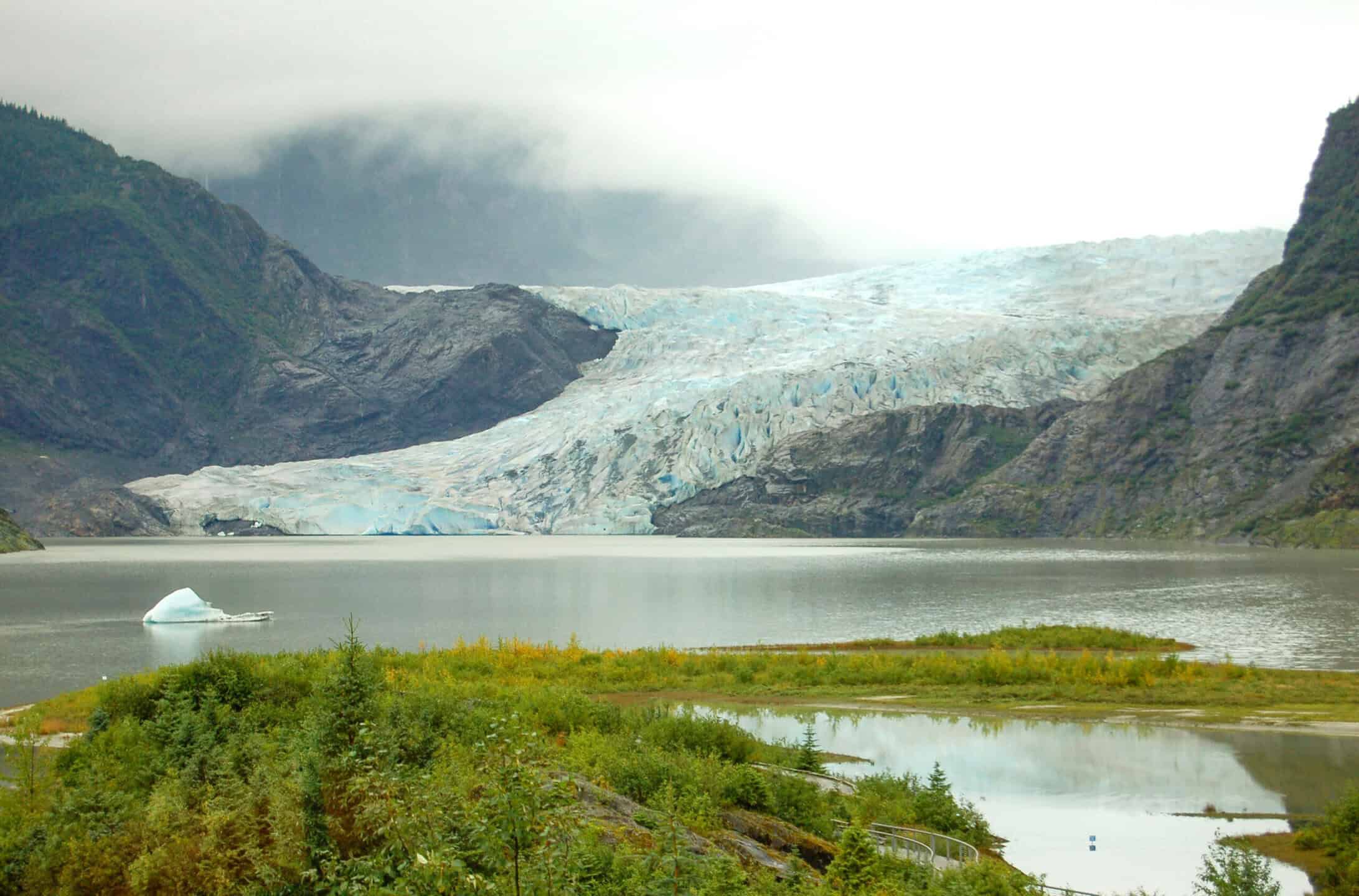
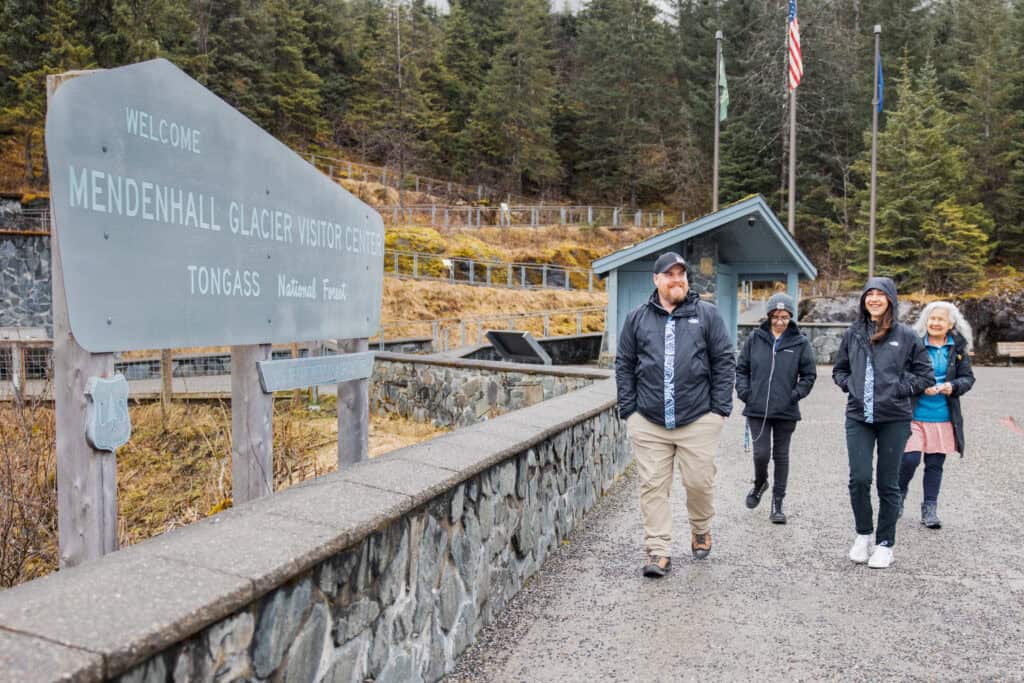
Federal layoffs and reorganizations in 2025 left many services and agencies understaffed, including the Mendenhall Glacier Recreation Area, where Forest Service staff reductions created a significant challenge. Yet this challenge opened an opportunity: Tlingit & Haida’s Cultural Ambassadors stepped in to fill critical gaps and ensure visitors continued to experience one of Southeast Alaska’s most iconic destinations.
Since the signing of a historic Co-Stewardship Agreement between Tlingit & Haida and the U.S. Forest Service in 2023, the ambassadors have partnered with the Forest Service to share Tlingit history, culture and language with tourists throughout the summer. Building on lessons from their pilot season in 2024, the ambassadors supported a small crew of Forest Service staff and volunteers this summer, ensuring the visitor center remained open and welcoming throughout the tourist season.
“With every interaction, we have the chance to share our stories, our language, and our values,” said Jeremy Timothy, Cultural Ambassador Manager. “Visitors leave not just having seen the glacier, but having a much richer experience of learning about the traditional history of this place and our people.”
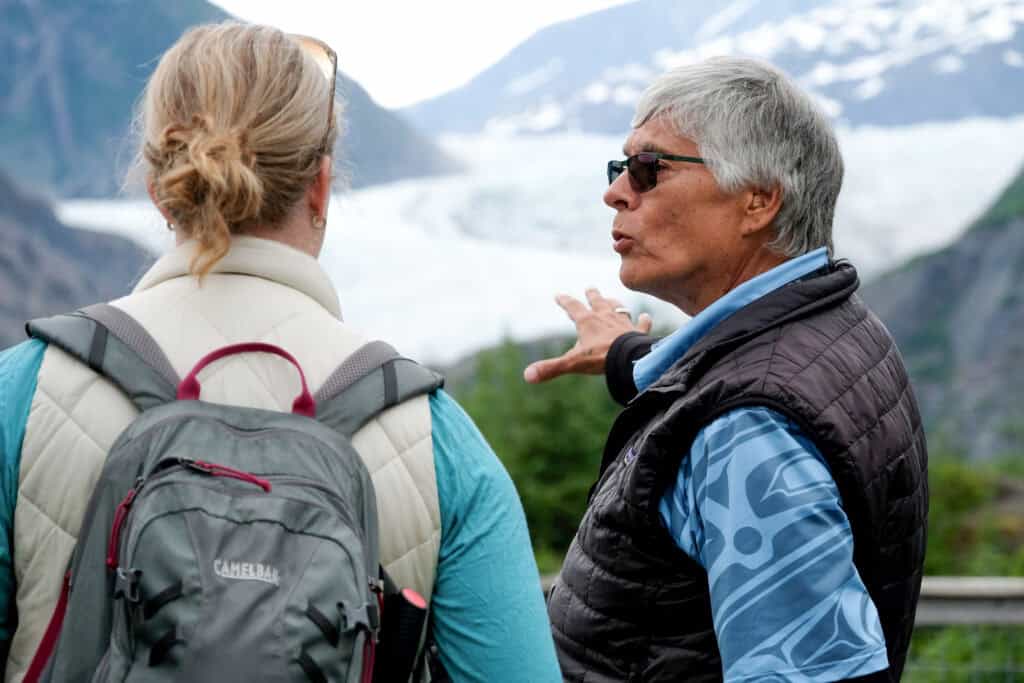
The Mendenhall Glacier (Áakʼw Tʼáak Sít’) attracts about 700,000 visitors each year. With more than 1.6 million people visiting Juneau via cruise ships this past summer, the Cultural Ambassadors recorded an official visitor interaction count for the first time in over 60 years of the Visitor Center’s operation. Over the season, ambassadors engaged in 58,600 meaningful interactions with visitors from around the world—answering questions ranging from “Where is the bathroom?” to “What is the significance of salmon?” and “Why are the raven and eagle so important in Tlingit history and culture?” In these moments, ambassadors serve as both educators and cultural interpreters, creating connections between visitors and the Áak’w Kwáan history.
Ambassadors also cared for the many four-legged, and winged visitors to the center, responding to medical emergencies, managing bear interactions to protect people and wildlife, and ensuring guests kept their distance from nesting Arctic Terns. These incredible birds stop along the lake shore on their journey from the Arctic to the Antarctic and back again, nesting in early summer and departing just before the Glacier Lake Outburst Flooding at the end of the season. Ambassadors were instrumental in monitoring and responding to flooding, prioritizing the safety of all visitors.
With the threat of further federal cuts looming, uncertainty remains for the next season at the Mendenhall Glacier Recreation Area. No matter the circumstances, Tlingit & Haida Cultural Ambassadors are ready to continue stewarding Áak’w T’áak Sít, their office with the best views in town.
For more information about Tlingit & Haida’s co-stewardship work, click here.
About the Author
Noah Meyer is a former Alaska Sea Grant State Fellow with Tlingit & Haida, working in the Indigenous Stewardship Division. His work focuses on developing tools and resources that support communities in mariculture. He holds a master’s degree in Global Environmental Affairs from the University of Denver’s Josef Korbel School of International Relations and applies his studies in environmental conflict and resource security.